
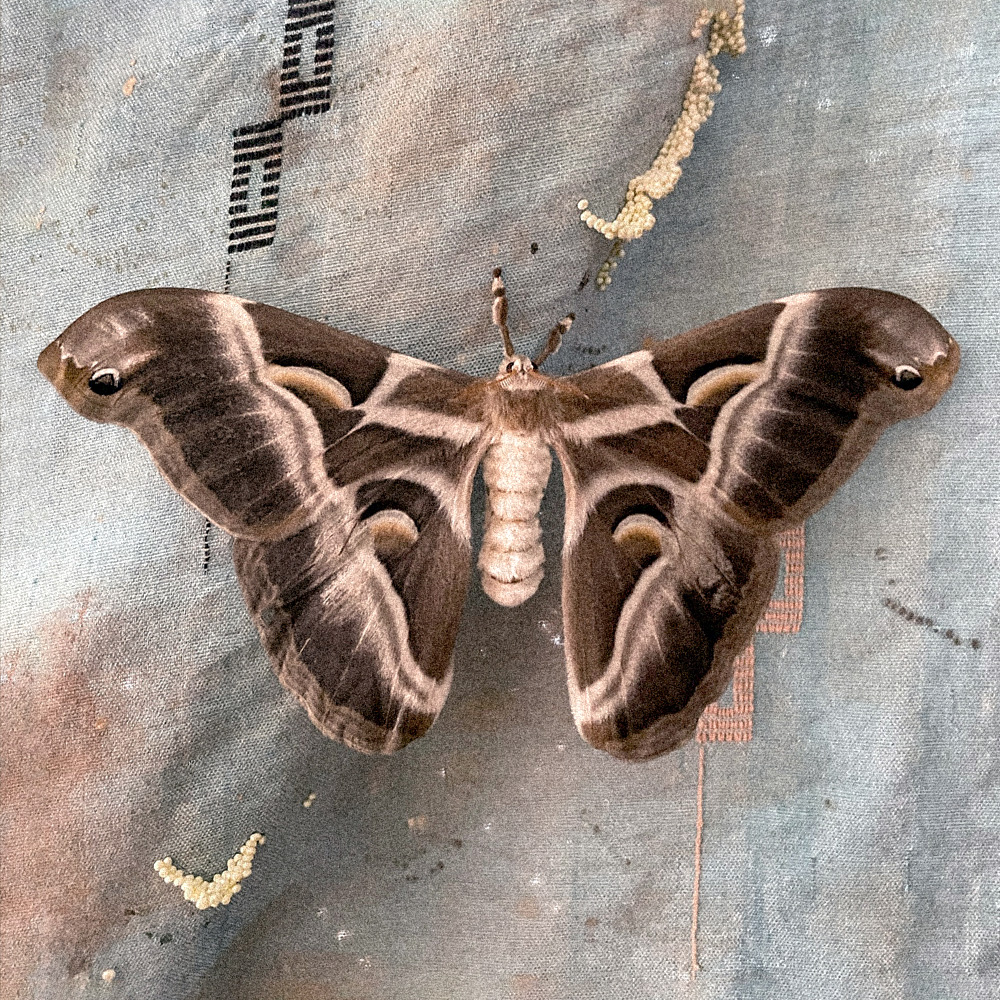
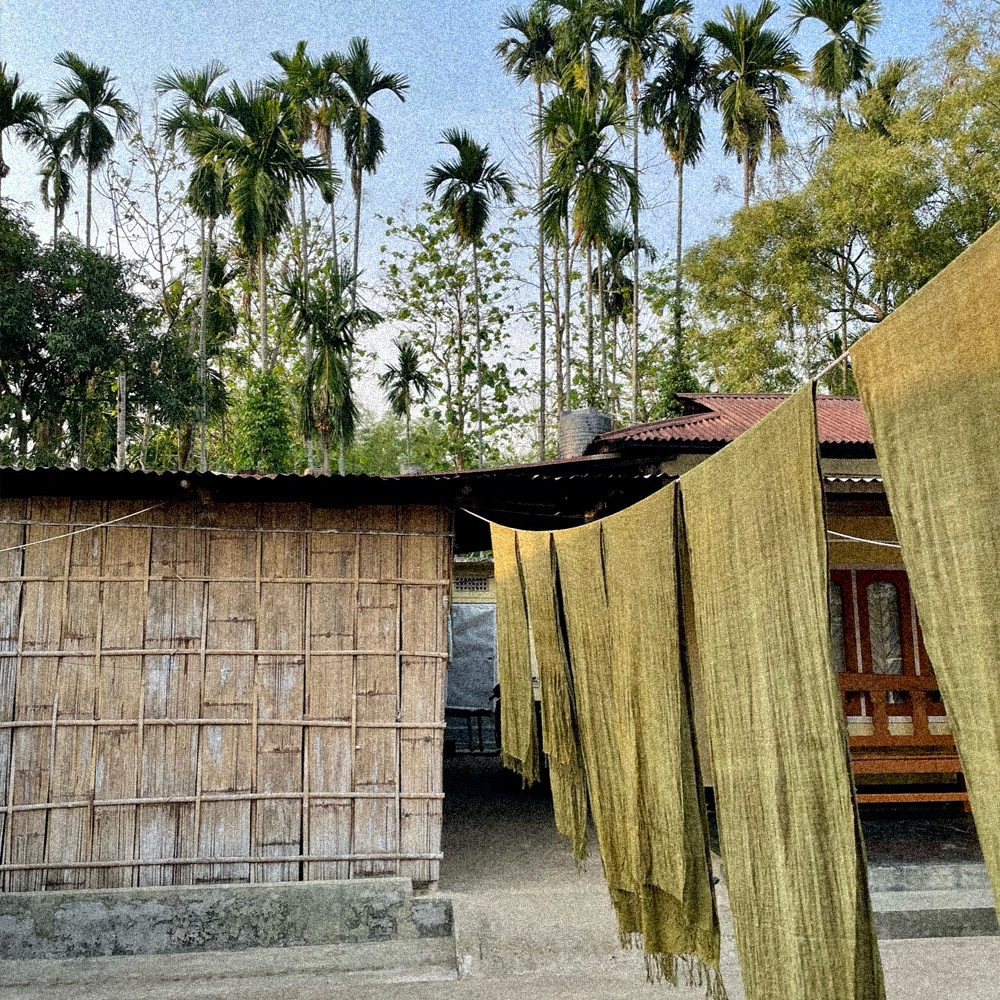
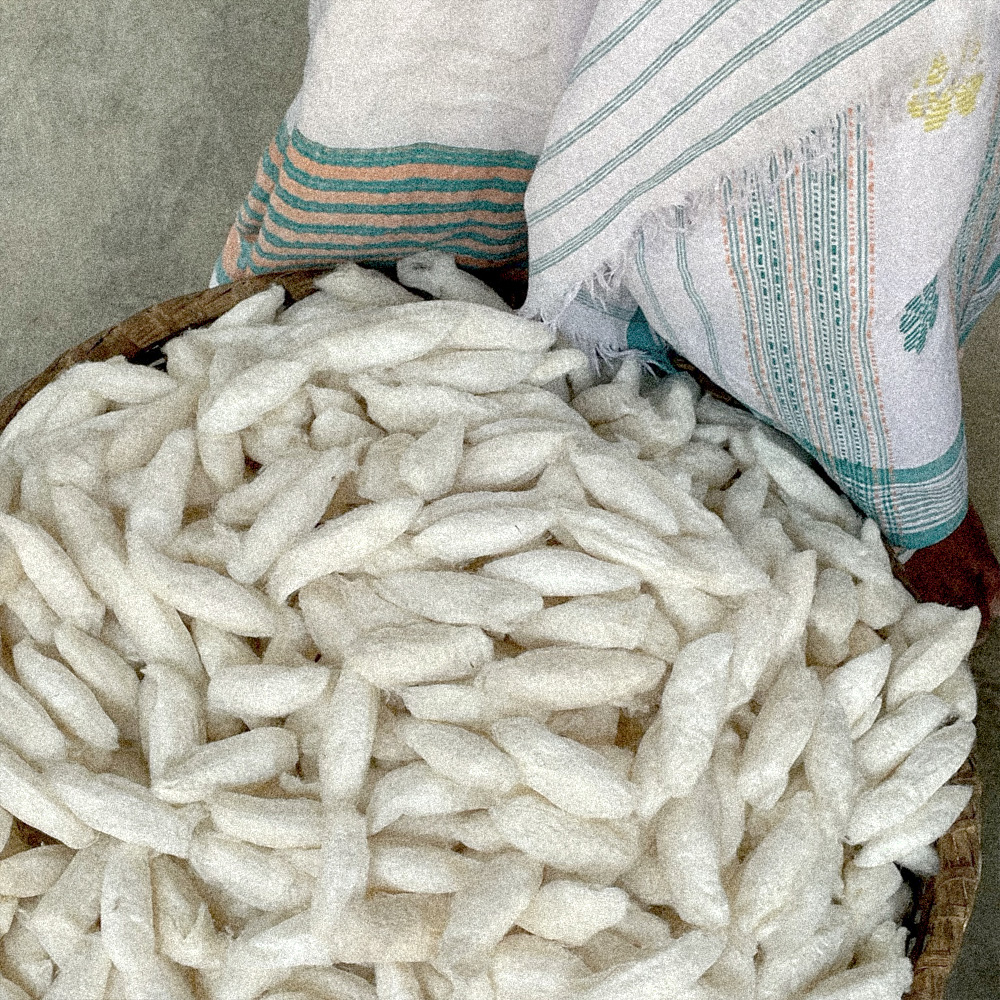
Originating in Assam, Eri silk takes its name from the castor plant, known as Era in the Assamese language, on which the silkworm feeds. A fibre that carries with it a history shaped by inherited gestures, local knowledge, and processes that require time, attention, and precision. Also known as peace silk, it is produced without interrupting the silkworm’s metamorphosis. The moth naturally emerges from the cocoon before the fibre is collected, following a natural cycle that preserves the integrity of both the process and the material itself.
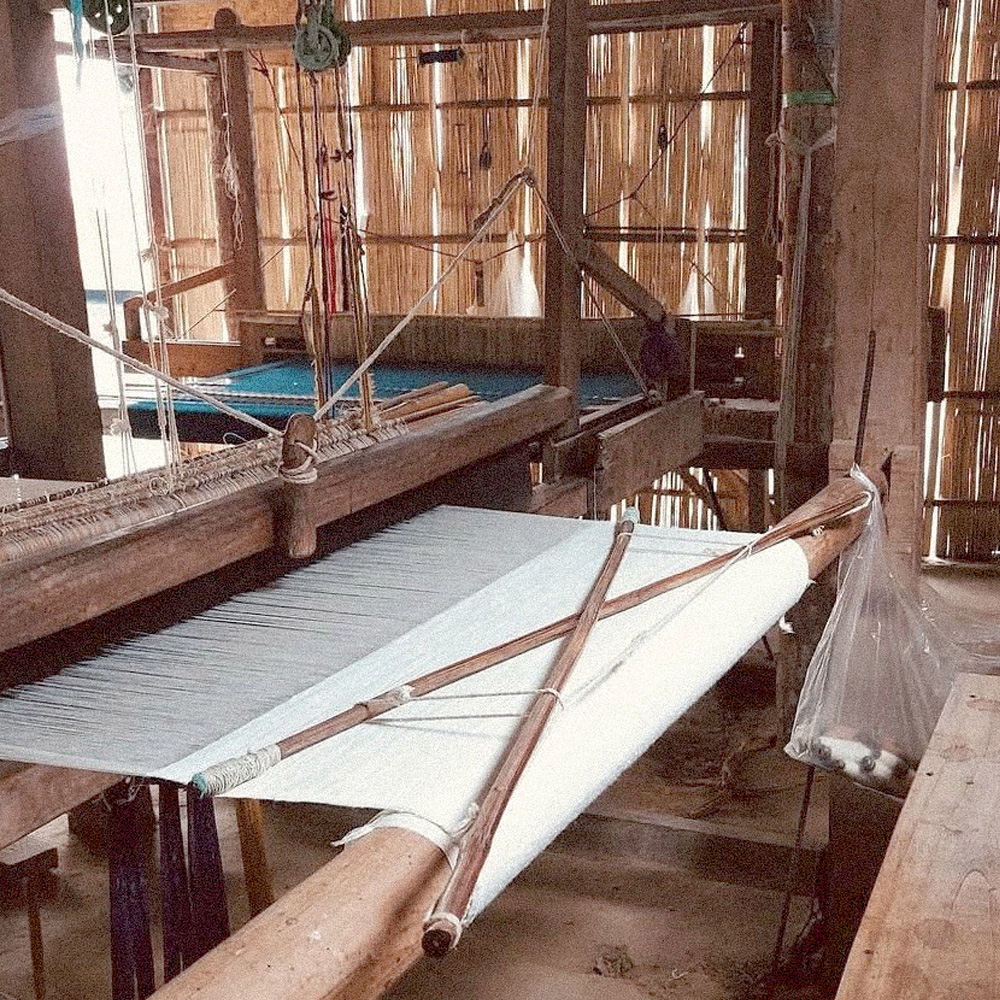
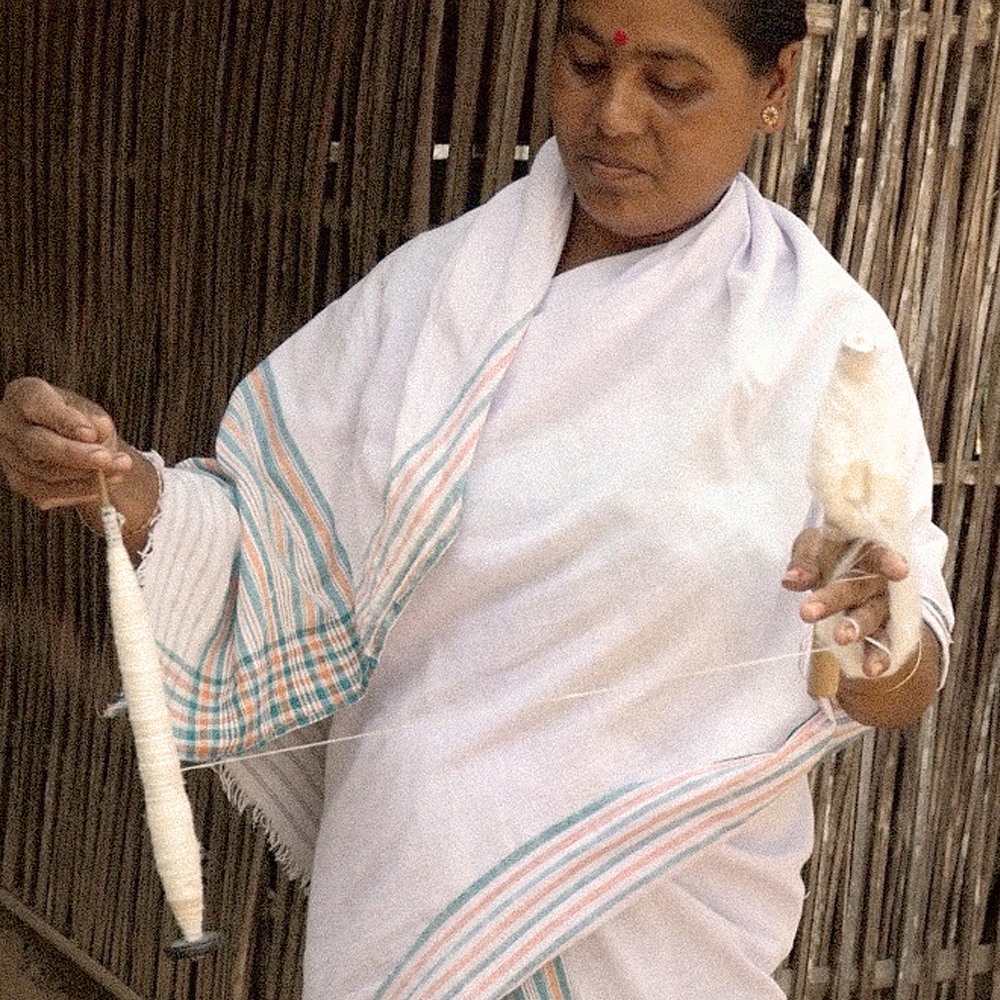
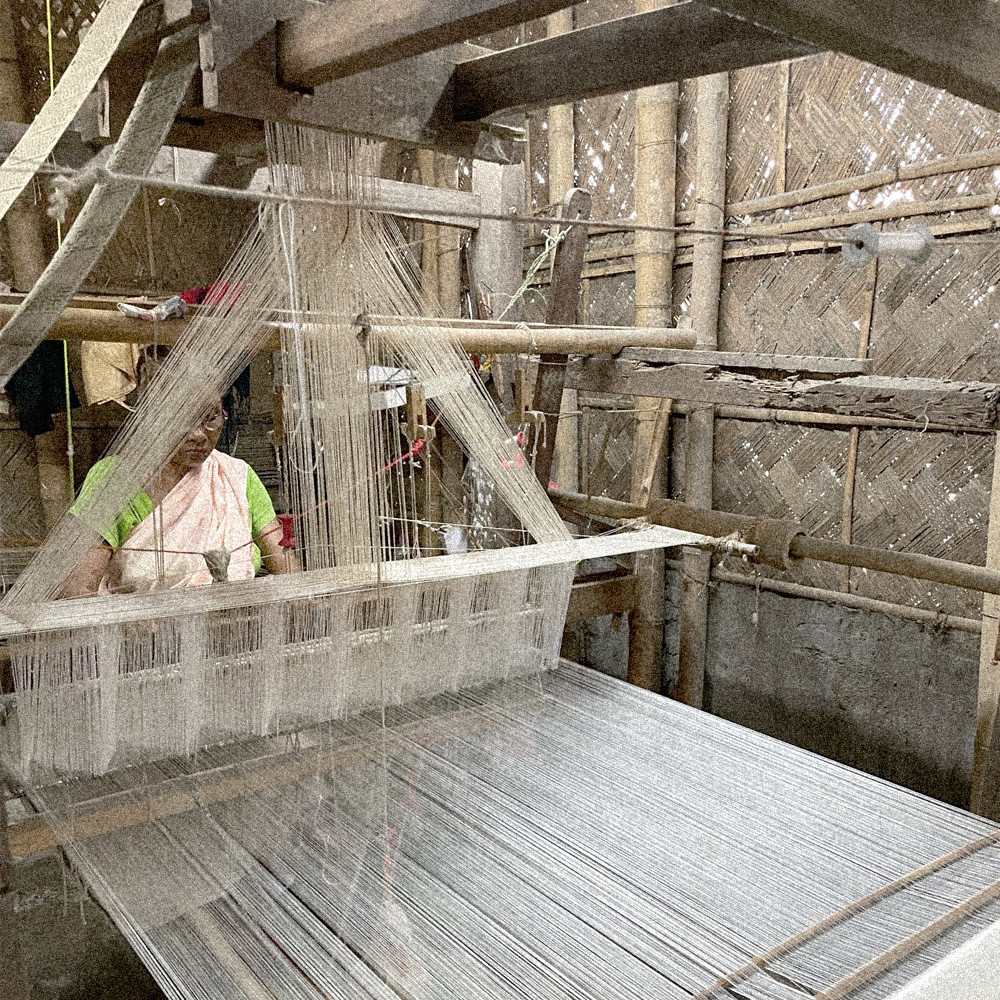
After harvesting, the fibre is hand-spun according to artisanal practices passed down through generations. A slow, repetitive gesture that lends the yarn character, depth, and subtle variations, making each textile unique. The weaving process emerges from the meeting of tradition and technical knowledge. The threads are carefully arranged and interlaced, transforming the silk into a living surface that is at once soft and structured.
Its beauty does not lie in perfection, but in the traces of the process that brought it into being.